
Almost every beginner who loses shrimp loses them to one of five mistakes. Not bad luck, not a mysterious illness — five specific, avoidable errors that come up again and again. The good news in that is simple: if you know all five before you start, you sidestep the vast majority of early shrimp deaths entirely.
I’ve made some of these myself, which is exactly why I can spot them. Let me walk you through each one — what it is, why it kills, and how to avoid it — so your first colony actually thrives instead of slowly disappearing.
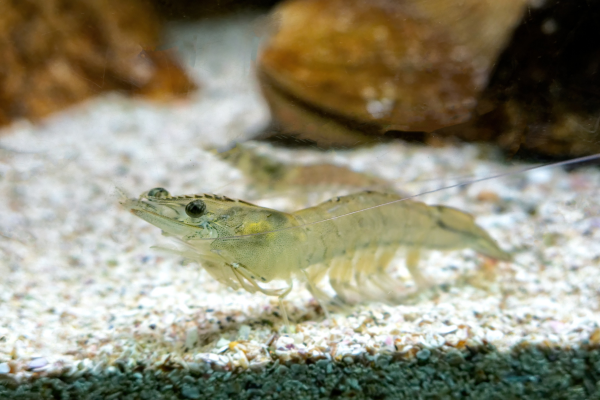
Mistake 1: Adding shrimp before the tank is cycled
This is the big one. It’s the mistake that kills more beginner shrimp than all the others combined, and it’s almost always made by accident, because the tank looks ready when it isn’t.
Here’s what’s really happening. Your shrimp produce waste that turns into ammonia, which is toxic. A healthy tank has colonies of beneficial bacteria that convert that ammonia into less harmful compounds — but a brand-new tank hasn’t grown those bacteria yet. Adding shrimp to an uncycled tank means dropping them into water that will slowly fill with poison, with nothing there to clean it up.
The cruel part is that the water looks perfectly clear the whole time. Clear water is not safe water. You can’t see ammonia, which is exactly why this mistake is so common.
The fix is patience and a test kit. Cycle the tank before any shrimp arrive — let the bacteria establish over a few weeks, and confirm with a liquid test kit that ammonia and nitrite both read zero before stocking. If you do only one thing right, make it this. The full process is covered step by step in the complete beginner’s guide to low-tech nano shrimp tanks, and it’s worth reading before you buy a single shrimp.
Mistake 2: Overfeeding
This one feels like kindness, which is what makes it sneaky. You watch your shrimp and you want to feed them, so you do — generously, and often. And that generosity is quietly poisoning the tank.
Shrimp are grazers. In a healthy tank they spend all day picking at biofilm, the invisible layer of microorganisms growing on every surface, so they’re rarely truly hungry. When you add a big helping of food on top of that, most of it goes uneaten, sinks, and rots — and rotting food spikes ammonia, the exact thing you cycled the tank to control.
A pinch of food two or three times a week is plenty for a small colony. The rule that saves shrimp: anything not eaten within a couple of hours should come out. And when you’re unsure whether to feed, the answer is almost always “not yet.” Far more shrimp die from overfeeding than from going hungry.
Mistake 3: Soft water and the molting problem
This one is invisible until it isn’t, and it catches people who did everything else right. Shrimp grow by molting — shedding their old exoskeleton and forming a new one — and to build that new shell they need minerals in the water, measured as general hardness, or GH.
When the water is too soft, shrimp can’t molt properly. They get stuck halfway through the process, which is usually fatal. The frustrating thing is that the tank can look pristine and the shrimp can seem fine right up until molting time, when they quietly start failing.
The fix is to check your GH and make sure it’s in a reasonable range for Neocaridina. If your tap water is very soft, a remineralizer adds the minerals back. This is the mistake that gets people who nailed cycling and feeding but never thought to test their water’s hardness — so test it.
Mistake 4: Sudden changes and bad acclimation
Shrimp are far more sensitive to sudden changes than to imperfect-but-stable conditions. A tank sitting steadily at slightly-off parameters will keep shrimp alive happily; a tank whose conditions swing quickly can kill them even if every individual reading looks fine on paper.
This mistake shows up in two main places. The first is acclimation — dumping newly bought shrimp straight into the tank. The water in their bag and the water in your tank are different, and going from one to the other instantly is a shock. The fix is to acclimate slowly, easing them into your tank’s water gradually over an hour or so before releasing them.
The second is big, abrupt water changes. Replacing a large chunk of the water all at once swings the parameters hard. Smaller, regular water changes keep things stable and gentle. With shrimp, steady and boring beats big and dramatic every time.
Mistake 5: Rushing and overcomplicating everything
The last mistake is less a single action and more a mindset, and it underlies several of the others: impatience. The urge to rush the setup, stock the tank early, add more shrimp than the tank is ready for, and buy every gadget that promises to help.
Rushing the setup leads straight to Mistake 1. Overstocking a brand-new tank overwhelms a bacterial colony that’s still establishing. And piling on high-tech gear — CO₂ kits, powerful filters, complicated equipment — adds failure points to a hobby whose entire strength is simplicity. In a low-tech tank, complexity isn’t an upgrade; it’s a liability.
The fix is to embrace how slow and simple this hobby is supposed to be. Set the tank up properly, wait through the cycle, start with a modest number of shrimp, keep the equipment minimal, and let the colony build at its own pace. Almost every beginner failure traces back to rushing one of these steps. Slow down and most problems never appear.
The pattern behind all five
Look across these five mistakes and the same theme runs through every one: shrimp want a stable, properly prepared, low-stress environment, and they want you to be patient enough to give it to them. Cycle before stocking. Feed sparingly. Keep the water mineralized. Change conditions gently. Don’t rush, don’t overcomplicate.
Do those five things and you’ve eliminated the causes of the overwhelming majority of beginner shrimp deaths. None of them are hard — they’re just easy to skip when you’re excited and want shrimp in the tank now. Resist that, get the basics right, and your first colony will reward you by not just surviving but multiplying.
If you want the full, step-by-step version of doing it right from the start, it’s all in the complete beginner’s guide to low-tech nano shrimp tanks — the article this whole list is really a warning to go read first.
