
Here’s a question with a refreshingly liberating answer: most low-tech Neocaridina tanks don’t need a heater at all. If you’ve been assuming an aquarium automatically requires one — because every fish tank you’ve ever seen had a heater glowing away in the corner — you can probably cross that cost and that piece of equipment off your list. But “probably” isn’t “definitely,” so let me explain exactly when you can skip the heater, when you actually need one, and why going heaterless is often the better choice for shrimp.
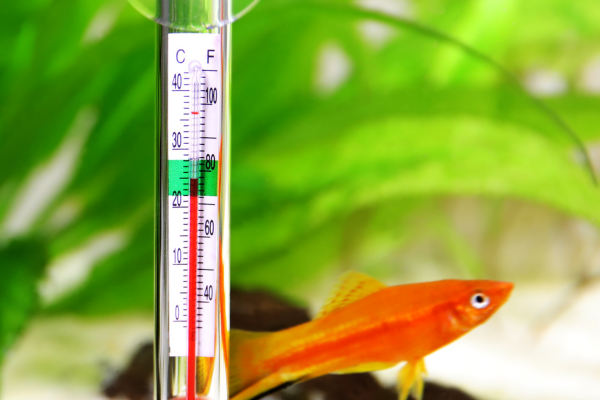
The short answer depends on your room
Whether you need a heater comes down to one thing: the temperature of the room your tank lives in. Neocaridina shrimp are comfortable across a wide temperature range — roughly 18 to 26°C (65 to 78°F) — which happens to overlap neatly with the temperature most people keep their homes and offices.
So the real question isn’t “do shrimp tanks need heaters” in the abstract. It’s “does your room stay within the range shrimp are happy in.” For most people keeping a tank on a desk in a normally heated living space, the answer is yes, the room already does the job, and a heater is redundant. For someone whose room gets genuinely cold, the answer changes.
This is why Neocaridina are such a good desk shrimp: they thrive at ordinary room temperature, which is exactly what a desk provides.
When you genuinely don’t need one
You can comfortably skip the heater if your room stays reliably within the shrimp’s comfortable range — which, for most indoor spaces, it does. A room that sits in the low-to-mid 20s°C through the day is ideal Neocaridina territory, and adding a heater to it would accomplish nothing except spending money and adding a device that could fail.
There’s actually a positive case for going heaterless beyond just saving money. Neocaridina tend to live longer at the cooler end of their range. Warmer water speeds up their metabolism, which makes them more active and breed faster in the short term, but it also shortens their lifespan. A tank running at steady, slightly cooler room temperature often produces healthier, longer-lived shrimp than a heated one. So skipping the heater isn’t a compromise — for many keepers it’s the preferable setup.
When you actually need a heater
There are real situations where a heater earns its place, so don’t take “you probably don’t need one” as “never use one.”
You need a heater if your room regularly drops below the high teens Celsius — for instance, a room that gets cold overnight, an unheated space in winter, or a naturally chilly room. Shrimp can tolerate cooler temperatures, but if the water is dropping into uncomfortable territory regularly, a heater keeps things in the safe range.
More importantly, you need a heater if your room temperature swings dramatically. This is the part beginners underestimate: shrimp care far more about stability than about hitting one perfect number. A tank that’s steady at the cool end of the range is fine; a tank that lurches from warm afternoons to cold nights is stressful even if every individual reading is technically within range. If your room has big daily temperature swings — say, a room that’s warm when you’re in it and cold when you’re not — a heater set to a stable temperature smooths those swings out and is worth having.
So the two triggers are: a room that’s consistently too cold, or a room that’s too unstable. If either describes your space, get a heater.
The stability point matters more than the number
It’s worth dwelling on stability, because it ties back to the single most important principle in keeping shrimp. Throughout shrimp keeping, steady “good enough” conditions beat fluctuating “perfect” ones, and temperature is no exception. Sudden temperature changes stress shrimp and can even trigger problems with molting and health.
This means a heater’s real value, when you need one, isn’t just adding warmth — it’s preventing swings. By holding the water at a constant temperature, it protects your shrimp from the daily ups and downs an unheated tank in an unstable room would experience. If you take one thing from this article, let it be that temperature stability is the goal, and a heater is simply one tool for achieving it when your room can’t on its own.
A note on direct sunlight and heat
While we’re on temperature, one warning that cuts the other way: don’t let your tank overheat either. A desk tank placed in direct sunlight from a window can heat up dramatically during sunny hours and then cool at night — exactly the kind of swing that stresses shrimp, and a much more common problem for desk tanks than being too cold.
So keep the tank out of direct sun. The ideal spot is one with stable, moderate room temperature and no sunbeam cooking the water through the afternoon. Solving this placement issue is often more important for a desk tank than worrying about a heater at all.
If you do use a heater
Should your situation call for one, a small heater appropriate for a nano tank’s volume is all you need, set to a stable temperature within the Neocaridina comfort range. Smaller tanks heat and cool faster than large ones, so a reliable heater and a thermometer to keep an eye on things are worth having. Set it, confirm it’s holding steady, and let it quietly do its job of keeping the water stable.
The bottom line
Do nano shrimp tanks need a heater? Usually not. Neocaridina are happy at normal room temperature, and a tank in a normally heated indoor space typically needs no heater at all — going heaterless even tends to produce longer-lived shrimp. You only need one if your room is regularly too cold or if its temperature swings dramatically through the day, in which case a heater’s real job is keeping conditions stable. And whatever you do, keep the tank out of direct sunlight to avoid overheating.
Check your room’s temperature over a few days before deciding. For most desk setups, you’ll find the room already does the work — one less thing to buy, and one less device to fail. Whether or not you add a heater, it’s all part of getting the tank’s conditions right before stocking, which begins with proper cycling as covered in the step-by-step guide to cycling a nano shrimp tank.
