
This is one of the first questions new shrimp keepers ask, and there’s a lot of conflicting advice floating around — some people swear you can run a shrimp tank with no filter at all, others insist you need one. Let me give you the clear, practical answer: yes, your shrimp tank should have a filter, but the kind you want is probably simpler and cheaper than you’re imagining. For a low-tech nano tank, the right choice is almost always one humble piece of gear.
Let me explain what a filter actually does, why it matters so much for shrimp specifically, and which low-tech option is the standard for good reason.
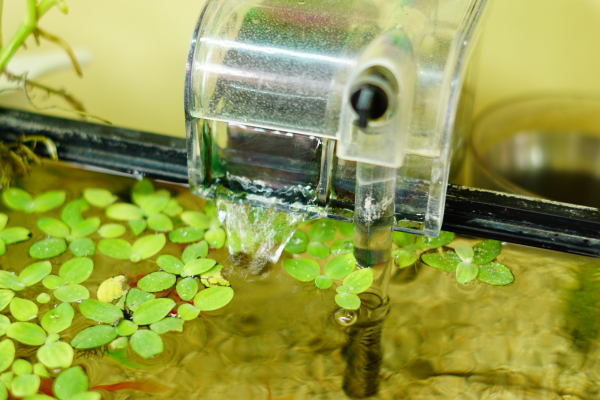
What a filter actually does (it’s not what you think)
Most beginners assume a filter’s job is to keep the water clear — to physically strain out the bits of debris floating around. That’s part of it, but it’s the least important part. The real job of a filter in any tank, and especially a shrimp tank, is biological.
Remember the nitrogen cycle: your shrimp produce waste that becomes toxic ammonia, and colonies of beneficial bacteria convert that ammonia into far less harmful compounds. Those bacteria need a home with lots of surface area and a constant flow of oxygenated water passing through it — and that home is your filter. The filter isn’t mainly cleaning the water you can see; it’s housing the invisible bacterial workforce that keeps the water safe. This is the same bacterial process you build during cycling, explained fully in the step-by-step guide to cycling a nano shrimp tank.
Once you understand that, the “do I need a filter” question almost answers itself. Without a filter, you have nowhere stable for those bacteria to live in large numbers, which makes keeping the water safe much harder. A filter gives your cleanup crew a permanent, well-oxygenated home.
Why shrimp have a special filter requirement
Here’s where shrimp differ from fish, and why you can’t just grab any filter off the shelf. Baby shrimp are tiny — nearly microscopic when they first appear — and a powered filter with a strong intake will happily suck them right up and kill them.
This is a real and common heartbreak for new keepers who set up a perfect tank, get their first batch of babies, and then watch the colony fail to grow because the filter is quietly eating the shrimplets. Adult shrimp can get caught too, but the babies are especially vulnerable.
So a shrimp filter has two requirements that pull in the same direction: it needs to be gentle, with no strong intake that endangers small shrimp, and it needs to provide plenty of surface area for bacteria. As it happens, one inexpensive option satisfies both perfectly.
The low-tech hero: the sponge filter
For a low-tech nano shrimp tank, the sponge filter is the standard, and it’s the standard because it’s genuinely ideal — not just cheap. It’s one of those rare cases where the budget option is also the best option for the job.
A sponge filter is exactly what it sounds like: a porous sponge connected to an air pump by a length of airline tubing. The air pump pushes air through the sponge, which draws water through it gently. That simple design delivers everything a shrimp tank needs.
It’s gentle by nature — there’s no powerful motorized intake, just a soft draw of water through the sponge, so even the tiniest baby shrimp are safe. It provides enormous biological surface area — the porous sponge is a sprawling, oxygen-rich home where beneficial bacteria thrive in huge numbers. And the sponge itself becomes a grazing surface: shrimp love picking at the biofilm that grows on it, so it doubles as a food source.
On top of all that, it’s cheap, it’s nearly silent apart from the soft hum of the air pump, and there’s almost nothing to break. For a low-tech tank, it’s hard to do better.
What about running no filter at all?
You’ll see experienced keepers running filterless shrimp tanks, and it can be done — but it’s not a beginner move, and here’s the honest reasoning.
A filterless tank relies entirely on a heavily planted, mature, well-established environment where live plants and surface bacteria handle the waste load on their own. That can work in the hands of someone who deeply understands the balance involved and is keeping a very lightly stocked, plant-dense tank. But it removes your biggest safety margin. The filter is a stable, reliable home for your bacteria; take it away and you’re leaning much harder on everything else going right.
For a beginner, going filterless trades a cheap, simple safeguard for extra risk and zero real benefit. There’s just no reason to do it. A sponge filter costs almost nothing and makes the whole tank more forgiving. Start with one. If years from now you want to experiment with a planted filterless tank, you’ll have the experience to judge it — but it’s not where you begin.
Setting up a sponge filter
The setup is refreshingly simple. You connect the sponge filter to an air pump using airline tubing, place the sponge in the tank, and switch the pump on. The air pump sits outside the tank, the tubing runs over the rim, and the sponge does its work inside. That’s essentially it.
A couple of small tips make it run better. Position the sponge where the gentle current it creates can circulate around the tank rather than being trapped in a corner. And when it comes time to clean it, never rinse the sponge under tap water — the chlorine kills your beneficial bacteria. Instead, give it a gentle squeeze in a container of the tank water you’ve removed during a water change. This rinses out the gunk while keeping the bacterial colony alive, which is the whole point of having the filter in the first place.
The bottom line
So, do shrimp tanks need a filter? Yes — and specifically a gentle one that won’t endanger baby shrimp while giving your beneficial bacteria a stable home. For a low-tech nano tank, a sponge filter paired with a small air pump is the near-universal answer: cheap, gentle, effective, and doubling as a grazing surface your shrimp will love. It’s one of the easiest decisions in the whole hobby.
Skip the powerful filters, skip the filterless experiments, and get a simple sponge filter running before your shrimp arrive. It works hand in hand with proper cycling to keep your water safe — and if you haven’t read how that cycling process works yet, start with the step-by-step guide to cycling a nano shrimp tank.
