
If you only ever keep one kind of shrimp, make it this one. Neocaridina davidi is the shrimp that got me into the hobby and the one I still recommend to literally everyone who asks. They’re hardy, they breed like they’re trying to win an award, they come in colors that look fake until you see them in person, and they ask almost nothing of you in return.
This is the deep-dive care guide — everything from the colors to the water to the slightly unsettling thing they do with their molted shells. If you’ve already got a tank cycled and ready, this is where you decide who’s moving in.
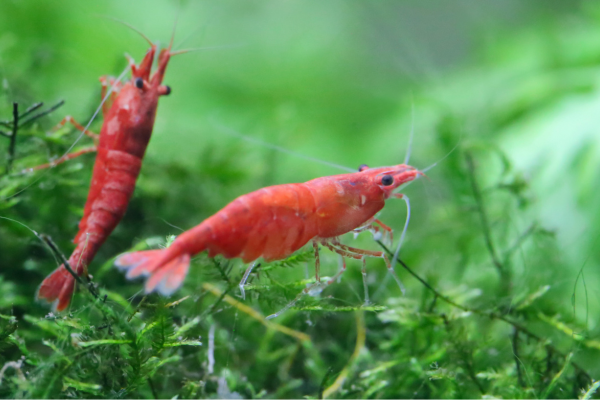
One species, a dozen colors
Here’s the thing that confuses every beginner: Cherry shrimp, Blue Dream, Green Jade, Orange Sakura, Bloody Mary — these are all the same species. They’re all Neocaridina davidi, just bred over generations for different colors. That’s genuinely good news for you, because it means they all need the exact same care. Learn it once, keep any color you like.
A quick tour of the popular ones:
- Red Cherry / Bloody Mary — the classic. Red Cherry is the entry point; Bloody Mary is a deeper, more solid red. Easiest to find, cheapest, very forgiving.
- Blue Dream / Blue Velvet — a rich blue that honestly doesn’t look real against green moss. My personal favorite for a desk tank because the contrast pops.
- Orange Sakura — bright, cheerful, and somehow always the ones visitors notice first.
- Green Jade — rarer, a soft olive green, a nice change if red and blue feel too common.
There’s a grading system too (Sakura, Fire, Painted Fire, and so on) that describes how solid and intense the color is. Higher grade means more coverage and a higher price. For a first tank, don’t overthink grades — get healthy shrimp from a decent source and let them color up in good conditions.
One important warning about mixing colors
Tempting as it is to build a rainbow tank, don’t mix different Neocaridina colors if you care about keeping those colors. Because they’re all the same species, they interbreed freely — and their babies revert toward the wild type, a muddy brown-green. Within a couple of generations your gorgeous mixed tank turns into a tank of plain brownish shrimp.
Pick one color per tank. (I learned this the slightly disappointing way.)
The water they actually want
This is where Neocaridina earn their beginner reputation: they tolerate a wide range, and they care far more about stability than about hitting some perfect number. A steady “good enough” tank beats a “perfect” tank you’re constantly tinkering with.
Rough targets:
- Temperature: 18–26 °C (65–78 °F). Room temperature is usually fine, which is why most desk keepers skip the heater. They actually live longer at the cooler end of that range.
- pH: around 6.8 to 7.8. They’re not picky, but they like it stable.
- GH (general hardness): this is the one that matters most. Neocaridina need some mineral content in the water to molt properly — soft water is a quiet killer. Aim for roughly 6–8 dGH. If your tap water is very soft, a remineralizer fixes it.
- Ammonia and nitrite: zero. Always. Non-negotiable. This is what cycling was for.
Notice I’m giving ranges, not single numbers. That’s deliberate. Chasing one exact value will drive you crazy and isn’t what the shrimp want anyway. Get into the range, keep it steady, and they’ll thrive.
Feeding: less than you think
Neocaridina are grazers. In a healthy planted tank they spend all day picking at biofilm — the invisible layer of microorganisms growing on every surface — and a lot of the time they don’t really need you to feed them at all.
When you do feed:
- A small amount of quality shrimp food two or three times a week is plenty for a colony.
- Blanched vegetables are a treat they go nuts for — a slice of zucchini or a spinach leaf, dropped in for a few hours. It’s genuinely fun to watch a dozen shrimp pile onto a piece of cucumber.
- The golden rule: anything not eaten within a couple of hours should come out. Leftover food rots, ammonia spikes, shrimp die. Overfeeding kills far more shrimp than underfeeding ever will.
If you’re ever unsure whether to feed, the answer is almost always “not yet.”
The molting thing (and why you’ll panic the first time)
The first time you see what looks like a dead, perfectly clear shrimp lying on the substrate, you’ll panic. Don’t. It’s almost certainly a molt — the empty exoskeleton your shrimp shed as it grew. A molt is see-through and hollow; a dead shrimp is opaque and pink. Once you’ve seen both, you’ll never confuse them again.
Two things worth knowing about molting:
- Leave the empty shell in the tank. The shrimp eat it to recover the minerals. Yes, it looks like cannibalism. It’s just recycling.
- Molting is when GH matters most. If shrimp struggle to molt — getting stuck halfway, which is usually fatal — soft water is the most common culprit. This is why I keep harping on general hardness.
Telling males from females
Easy once you know what to look for, and useful because it tells you whether to expect babies.
Females are larger, rounder, and usually more intensely colored, with a curved underside belly where they carry eggs. Males are smaller, slimmer, and often a bit more transparent. In a group of ten adults you’ll spot the difference pretty quickly — the females just look more substantial.
Breeding (which mostly means: doing nothing)
Here’s the best part. If your shrimp are healthy and your water is stable, you don’t make Neocaridina breed. You just stop them from being unhappy, and they handle the rest.
The sign you’ve succeeded is a berried female — a female carrying a clutch of eggs tucked under her tail, fanning them with her legs to keep them oxygenated. She’ll carry them for around three to four weeks, and then one day you’ll spot what looks like specks of dust moving on the moss. Those are the babies — perfect miniature versions of the adults, no larval stage, no special care needed.
The first time I noticed a berried female I probably checked the tank six times that day. It’s a small thing, but it’s the moment the hobby clicks: you didn’t just keep some shrimp alive, you built something a colony actually wants to live and reproduce in.
To help babies survive, give them cover — moss is perfect. The tiny shrimp hide in it and graze the biofilm it traps, and a sponge filter (rather than a filter that could suck them up) keeps them safe.
How long they live, and what a healthy tank looks like
Neocaridina live roughly one to two years. That’s short, but a stable colony is constantly producing the next generation, so the tank as a whole keeps going long after any individual shrimp. People don’t really keep a shrimp; they keep a colony.
A healthy Neocaridina tank looks busy. Shrimp out in the open during the day, actively grazing, good color, females regularly carrying eggs. Shrimp that hide constantly, lose color, or stop breeding are telling you something’s off — and the answer is almost always water-related: check your parameters before you change anything else.
The short version
Pick one color and stick to it. Keep the water stable and your GH up. Feed sparingly and pull out leftovers. Don’t panic at molts, do leave the shells in, and give the babies some moss to hide in. Do that, and Neocaridina will reward you with one of the most genuinely low-effort, high-payoff little ecosystems you can put on a desk.
They really are the perfect beginner shrimp. Just be warned — almost nobody stops at one tank.
