
It’s one of the most tempting ideas a new shrimp keeper has: a single tank full of red, blue, orange, and green shrimp, a living rainbow grazing across the moss. So can you actually do it? Technically, yes — nothing stops you from putting different colored Neocaridina in the same tank, and they’ll all live together peacefully. But should you? That’s a firm no for almost everyone, and the reason why is worth understanding before you make a decision you’ll slowly regret.
Let me explain exactly what happens when you mix them, why it disappoints nearly everyone who tries it, and the right way to keep multiple colors if you really want them.
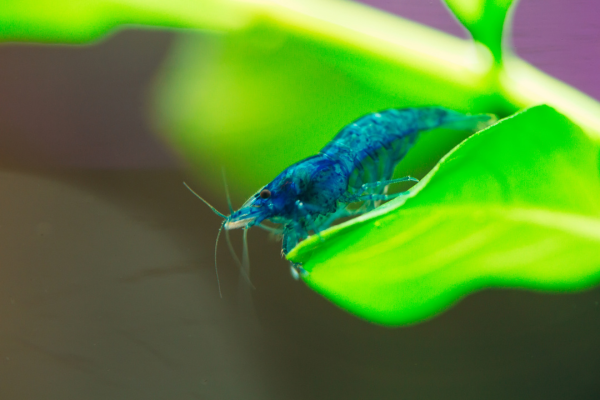
Yes, they can physically live together
First, the reassuring part. Different colors of Neocaridina — Red Cherry, Blue Dream, Orange Sakura, Green Jade, and the rest — are all the same species, Neocaridina davidi. That means they have identical care requirements and get along perfectly. There’s no aggression, no compatibility problem, no territory disputes. Drop a blue shrimp and a red shrimp in the same tank and they’ll graze side by side without a second thought.
So if your only question is “will they fight or stress each other out,” the answer is no. They coexist beautifully. The problem isn’t how they live together — it’s what happens when they breed.
Why mixing ruins the colors
Here’s the catch that sinks the rainbow dream. Because all these colors are the same species, they interbreed freely. A blue shrimp and a red shrimp will happily produce babies together — and those babies don’t come out red or blue or some pretty blend. They revert toward the wild type: a dull, muddy brownish-green that looks nothing like either parent.
This happens because those vivid colors are the result of generations of careful selective breeding, deliberately concentrating specific traits. When you cross two different color lines, you scramble that careful work. The offspring carry a mix of genetics that defaults back toward the plain, camouflaged coloring wild Neocaridina have — the color nature actually selected for, because being drab keeps a shrimp from getting eaten.
So a mixed tank doesn’t stay a rainbow. The first generation of babies starts showing muddy, washed-out colors, and with each new generation more of the colony reverts. Within a few breeding cycles — and Neocaridina breed fast — your vibrant mixed tank becomes a tank of unremarkable brown shrimp. The rainbow doesn’t blend into something prettier; it dissolves into mud.
It’s one of the most common disappointments in the hobby, precisely because the initial idea is so appealing and the consequence isn’t obvious until it’s well underway.
The exception: mixing within the same color line
There’s a nuance worth knowing. The reversion problem comes from crossing different color lines. Mixing shades that come from the same genetic line is a different story — for example, different grades of red Cherry shrimp will breed together fine and keep producing red offspring, because they’re not crossing into a separate color’s genetics.
What causes the muddy reversion is mixing genetically distinct color lines: red with blue, blue with green, and so on. Shades within one color family are generally safe. If you’re ever unsure whether two variants share a line, the safe assumption is to treat clearly different colors as a mix to avoid.
So how do you keep multiple colors?
If you love several colors — and who doesn’t — the answer isn’t one mixed tank. It’s separate tanks, one color each. Keep your Red Cherries in one tank and your Blue Dreams in another, and each colony stays pure and vivid, breeding true generation after generation. This is exactly how keepers maintain multiple beautiful colors, and it’s the reason so many people in this hobby end up with more than one tank.
For a desk setup this is rarely a hardship — nano tanks are small, and a second one is easy to fit. In fact, “I’ll just get one more tank for the blue ones” is something of a running joke in the hobby, because almost nobody stops at a single tank anyway. If multiple colors are calling to you, embrace it: a second small tank is a feature, not a burden.
What if you don’t care about color?
One honest caveat: if you genuinely don’t care about keeping vivid colors and just enjoy watching shrimp graze and multiply, then mixing is harmless. The brown offspring are perfectly healthy, perfectly happy shrimp — they’ve simply lost the showy coloring. Some keepers actually find the natural wild-type coloration charming in its own understated way, and there’s nothing wrong with that.
The reversion is only a “problem” if your goal was vivid color. If your goal is just a thriving, low-effort colony of living things on your desk, a mixed tank delivers that fine — it’ll just look more natural and less like a jewel box over time.
The bottom line
Can you mix Neocaridina colors? Yes — they’ll live together peacefully. Should you? Only if you don’t mind watching those colors fade to muddy brown over a few fast generations of interbreeding. For anyone who chose this hobby for the gorgeous reds and blues, the answer is to keep one color per tank and add a second tank for the next color you fall for. Pure colonies stay vivid; mixed colonies revert.
Pick a color, commit the tank to it, and keep it pure — it’s the same single rule that runs through all of Neocaridina keeping, and it’s covered alongside everything else in the Neocaridina shrimp care guide.
