
The first time you see what looks like a perfectly intact, completely transparent dead shrimp lying on the bottom of your tank, your heart sinks. Then you count your shrimp, find them all alive and well, and stare back at the ghostly shape in confusion. Congratulations — you’ve just witnessed your first molt, one of the most normal and important things a healthy shrimp does. Molting is essential, fascinating, and almost always nothing to worry about. But there are a couple of molting-related problems worth knowing, so let me explain the whole thing.
What molting actually is
Shrimp, like all crustaceans, have a hard external skeleton — an exoskeleton — on the outside of their bodies. Unlike our internal skeletons that grow with us, a rigid external shell can’t expand. So in order to grow, a shrimp has to periodically shed its entire old exoskeleton and form a new, larger one underneath. That shedding process is molting.
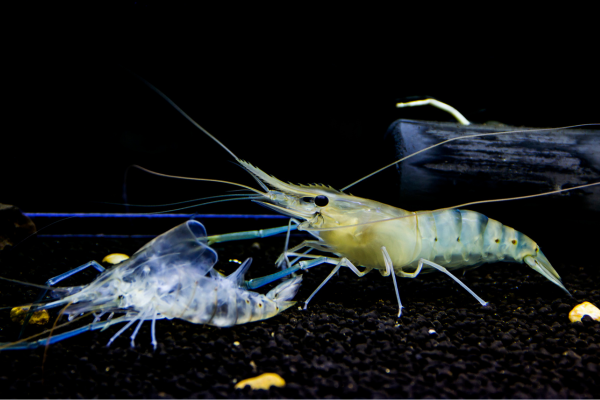
When a shrimp molts, it essentially climbs out of its old shell, leaving behind a complete, hollow, transparent replica of itself — the cast-off exoskeleton. The shrimp emerges slightly larger and soft-bodied for a short while until its new shell hardens. This is a completely natural, necessary part of a shrimp’s life, and a shrimp will molt many times as it grows. Seeing molts in your tank is a sign of healthy, growing shrimp.
That’s a molt, not a dead shrimp
The single most common molting confusion is mistaking a shed exoskeleton for a dead shrimp, so here’s how to tell them apart instantly. A molt — the empty cast-off shell — is transparent and hollow, like a clear glass shrimp. You can often see right through it, and it looks like an empty husk because that’s exactly what it is. A dead shrimp, by contrast, is opaque and typically pinkish or white, with its body still solid and present.
Once you’ve seen both, you’ll never mix them up again. Clear and see-through means a healthy shrimp molted and is off growing somewhere; solid and colored means, unfortunately, a deceased shrimp. So the next time you spot a transparent shrimp-shape on the substrate, don’t panic — count your colony, and you’ll almost certainly find everyone present and accounted for.
Leave the molt in the tank
Here’s a piece of advice that surprises people: when you find a molt, leave it in the tank. It looks like litter you should remove, but it serves a real purpose. Shrimp will eat their own cast-off exoskeletons to reclaim the valuable minerals — particularly calcium — locked up in them, which they then use to build their next shell.
Yes, it looks a little like cannibalism, but it’s really just efficient recycling. The molt is a mineral resource, and letting your shrimp consume it returns those minerals to their bodies rather than wasting them. So resist the urge to scoop molts out. Leave them; the shrimp will deal with them over the next day or two, and they’ll often disappear on their own as they’re eaten.
When molting IS a problem: the failed molt
Now the part where worry is occasionally justified. While molting itself is healthy, there’s a molting failure that’s serious, usually called a failed molt or “the White Ring of Death.” This happens when a shrimp can’t successfully complete its molt — it gets stuck partway out of its old shell — and it’s frequently fatal.
The telltale sign keepers watch for is a visible white line or ring around the shrimp’s body, typically near the neck area, where the old shell separates but the shrimp can’t free itself. A shrimp struggling to molt and failing is in real trouble, and sadly there’s usually little you can do once it’s happening. The important work is preventing it, which is very much within your control.
What causes failed molts (and how to prevent them)
Failed molts almost always trace back to water conditions, and the two main culprits are both preventable.
The biggest is incorrect mineral levels — specifically GH (general hardness) that’s too low. Shrimp need adequate dissolved minerals, particularly calcium, to build a proper new shell and molt cleanly. When the water is too soft, they can’t form the new exoskeleton correctly and get stuck. This is why GH is the water parameter most directly tied to shrimp survival. Keeping your GH in the right range — around 6 to 8 dGH for Neocaridina — is the single most effective way to prevent failed molts. If your water is naturally very soft, a remineralizer made for shrimp corrects it.
The second culprit is sudden changes, especially abrupt large water changes. A rapid shift in parameters can trigger a shrimp to molt at the wrong time or interfere with the molting process. This is yet another reason the whole hobby emphasizes stability and small, gentle water changes over big sudden ones. Avoid shocking your tank, and you avoid molt-disrupting swings.
So prevention comes down to two familiar principles: keep your GH adequate, and keep your conditions stable. Do those and failed molts become rare.
A note on overfeeding and molting
One more connection worth knowing: there’s a long-standing observation among keepers that doing a water change with very different water, or sudden shifts in general, can prompt a wave of molting. While a little molting after maintenance can be normal, a sudden mass molt is a sign your water change was too drastic — another nudge toward the gentle, small, temperature-matched water changes shrimp prefer. Steady husbandry keeps molting on its natural, healthy rhythm.
The bottom line
Why is your shrimp molting? Because it’s growing, and shedding its old exoskeleton to form a bigger one is simply how shrimp grow — it’s normal, necessary, and a sign of health. The clear, hollow shell you find is a molt, not a dead shrimp, and you should leave it in the tank for your shrimp to eat and recycle its minerals. The only molting issue to genuinely worry about is a failed molt, where a shrimp gets stuck, and that’s prevented by keeping your GH in the proper range and your water conditions stable.
So the next time you spot that ghostly transparent shrimp-shape on the substrate, you can relax — it’s a good sign. Molting is a healthy part of the care cycle covered fully in the Neocaridina shrimp care guide.
